The Nonesuch Apple of Hubbardston
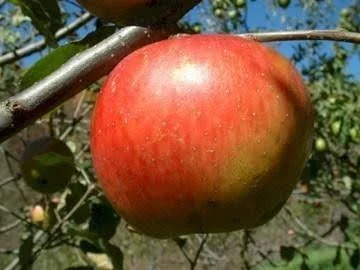
Photo by Alden Adams, 2006
As you might guess from its quaint name, this is an old variety of apple.
First recorded in Massachusetts in 1832, its roots appear to go back even further. According to “Bussey Illustrated” The History of Apples, these trees originated from a farm owned by Barzillai Gleason who lived about 4 miles west of the village of Hubbardston. This tree was said to have been planted in the 1780's and was known to still be growing as late as 1875 on a farm on Williamsville Road.
The apple was named in honor of the town and its namesake, Hon. Thomas Hubbard. The name Nonesuch was derived from the French term Nonpareil meaning, “without equal”. This description was used as a distinguishing label to entice consumers and growers alike. You may also find this apple listed as "nonsuch," a more common spelling in the early days.
It was an apple with some significant prominence back in the day. Growers in its home state, as well as New York, grew plenty of Hubbardston Nonesuch apples to be sold each autumn in the big cities of the United States Northeast. The September 1845 issue of the “The Magazine of Horticulture” also highly rated the apple and reported it was in much demand in the Boston markets during autumn months.
Hubbardston Nonesuch apples are featured in the town seal; two apples flank either side of an image of the town’s public library. Hubbardston Nonesuch is even written around each apple to celebrate the prominence of agriculture within the town’s history. The Nonesuch name is still used by businesses in town and attached to town events and organizations.
Over time, the Hubbardston Nonesuch apple variety was replaced in commercial orchards with easier to grow apples. Today, the Hubbardston Nonesuch apples are a rare heirloom cultivar and planted as a novelty apple in preservation orchards. Although it is no longer a big seller, it is still a great old apple.
When you look at it, let alone taste its mild subtle flavors, it’s easy to see how the Nonesuch apple connects us with our own historical past. And that is most certainly a good thing.
Sources:
“Bussey Illustrated” History of the Apple
“Trees of Antiquity” California
“Cummings Nursery” New York
“Specialty Produce” California
"Transactions of the Massachusetts Horticultural Society for the Year 1875"
Photo by Alden Adams, 2006